
Financial operations
Your finance manager, end to end.
Payables and bookkeeping run themselves and the books close in hours. Once they are closed, Finn starts answering the questions a CFO would.
Every payable ingested automatically
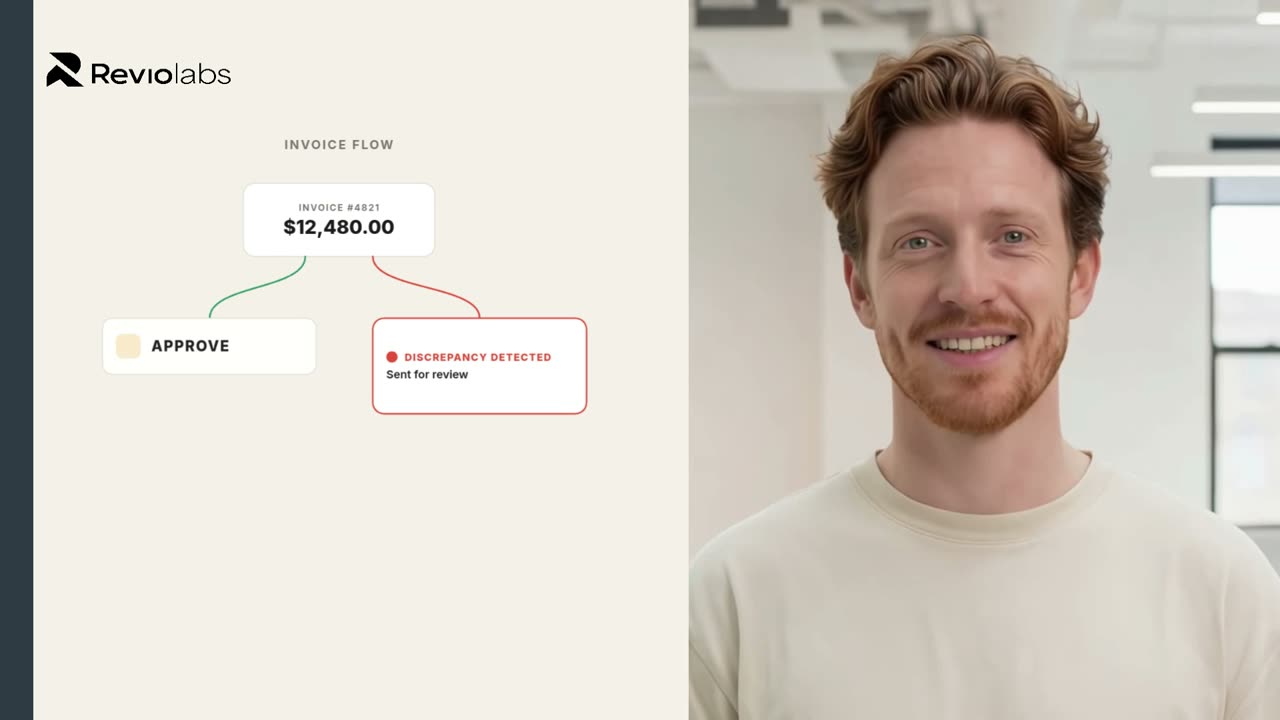
Nothing is keyed in. Each invoice is then checked against what was actually agreed to pay: contracts, rates, and the underlying work. A mismatch is flagged, a match moves through approval and payment into the books.
Books that reconcile as the month runs
Transactions are classified, matched, reconciled and checked continuously, with missing information and unusual items surfaced as they appear rather than at close. He learns your rules as he goes.
Then he becomes the CFO
With the books closed and the data current, he shows what changed, why, what happens next and where you need to act, and forecasts revenue, costs and cash from live actuals.
What changed
Running in · Our own finance functionRunning our own finance function, not a demo of one. Receivables are monitored here and collected by Stella, who has a page of her own.
What happens when it isn't sure
Anything that does not match what was agreed is flagged rather than paid. Missing information and unusual items are surfaced as they appear, so your people spend their time on exceptions and decisions instead of on the routine.
Most of this already exists and is running. What gets built for you is the part that has to match how you actually work, which is why it is live in weeks rather than quarters.
For Finn, that means your chart of accounts, your approval thresholds, your contracts and rates, your reporting pack. He learns your rules over time rather than being configured once and left.
Your data stays yours and is never used to train shared models. How we handle security.